Government Challenges EQUSaT to Lead in Competence-Based Education,...
October 23, 2026

A milestone of academic achievement, resilience and renewed commitment to shaping future leaders through science, technology and innovation.
Equator University of Science and Technology (EQUSaT) has proudly celebrated its First-Ever Graduation Ceremony, marking a defining milestone in the University's journey towards academic excellence, innovation and human capacity development.
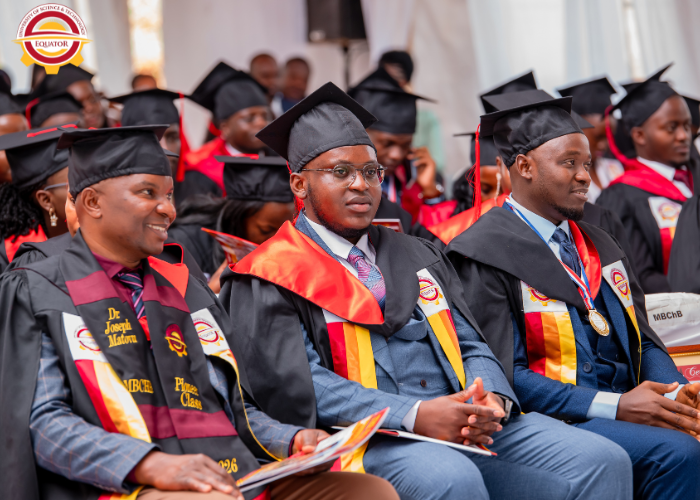
Held on Friday, 23 October 2026, at the University campus, the historic ceremony brought together university leadership, distinguished guests, graduands, parents, guardians, partners and members of the academic community to celebrate the achievements of the University's pioneering graduates.
The occasion represented more than the conferment of academic qualifications. It was a celebration of determination, sacrifice, resilience and the collective efforts of students, lecturers, families and the University's leadership in transforming educational aspirations into tangible achievements.
For EQUSaT, the first graduation represents the fulfilment of an important institutional commitment: nurturing competent, innovative and socially responsible graduates equipped to contribute meaningfully to their communities and the wider world.
The graduating class holds a special place in the University's history. As the first cohort to complete their academic journeys at EQUSaT, these graduates have become part of the institution's foundation and legacy.
Their achievements reflect the University's commitment to providing quality, practical and multidisciplinary education across fields including health sciences, information technology and business administration.
Through academic instruction, practical training, mentorship and exposure to real-world challenges, EQUSaT continues to prepare graduates to translate knowledge into solutions that address contemporary societal needs.
The University's educational philosophy extends beyond the acquisition of academic qualifications. It emphasises practical competence, innovation, research, entrepreneurship and responsible citizenship.
By investing in modern learning facilities, practical training environments, academic partnerships and opportunities for experiential learning, EQUSaT seeks to bridge the gap between classroom knowledge and professional practice.
This approach aligns with the University's broader ambition of contributing to national and global development through education, science and technology.
The historic graduation also recognised the contribution of the University's academic and administrative leadership, teaching staff, parents, guardians and institutional partners.
Their continued support has played an important role in establishing an environment where students can learn, grow and pursue their ambitions.
As the University celebrates this achievement, it also acknowledges that the success of its pioneering graduates represents the beginning of a much larger journey.
The first graduation is not an endpoint but a foundation for greater ambitions. EQUSaT remains committed to expanding educational opportunities, strengthening research and innovation, building meaningful partnerships and developing graduates capable of responding to the changing demands of society.
The University's commitment also resonates with the United Nations Sustainable Development Goals, particularly SDG 4 (Quality Education),
SDG 3 (Good Health and Well-being), SDG 8 (Decent Work and Economic Growth), SDG 9 (Industry, Innovation and Infrastructure) and SDG 17 (Partnerships for the Goals).
To the pioneering graduates, the University extends its heartfelt congratulations. Your journey at EQUSaT has prepared you for the opportunities and responsibilities ahead. As you enter the next chapter, may you use your knowledge, skills and experiences to transform lives and make meaningful contributions to society.
EQUSaT celebrates its pioneers today and looks forward to the generations of innovators, professionals and change-makers yet to come.
ENABLING HUMAN CAPACITY.